Are you wondering how many transport resources you will need to operate a newly built warehouse? By using FlexSim, you can find the answer!
Equipping a warehouse with the right material handling resources is a strategic decision that affects efficiency, costs, and overall logistics. Poor choices can lead to bottlenecks, increased operating costs, and underutilized resources.
In this article, we present a case study in which process simulation was used to determine the optimal number and type of material handling resources for a newly built warehouse. The results led to a significant improvement in efficiency and cost savings.
The challenge: balancing efficiency and resource allocation
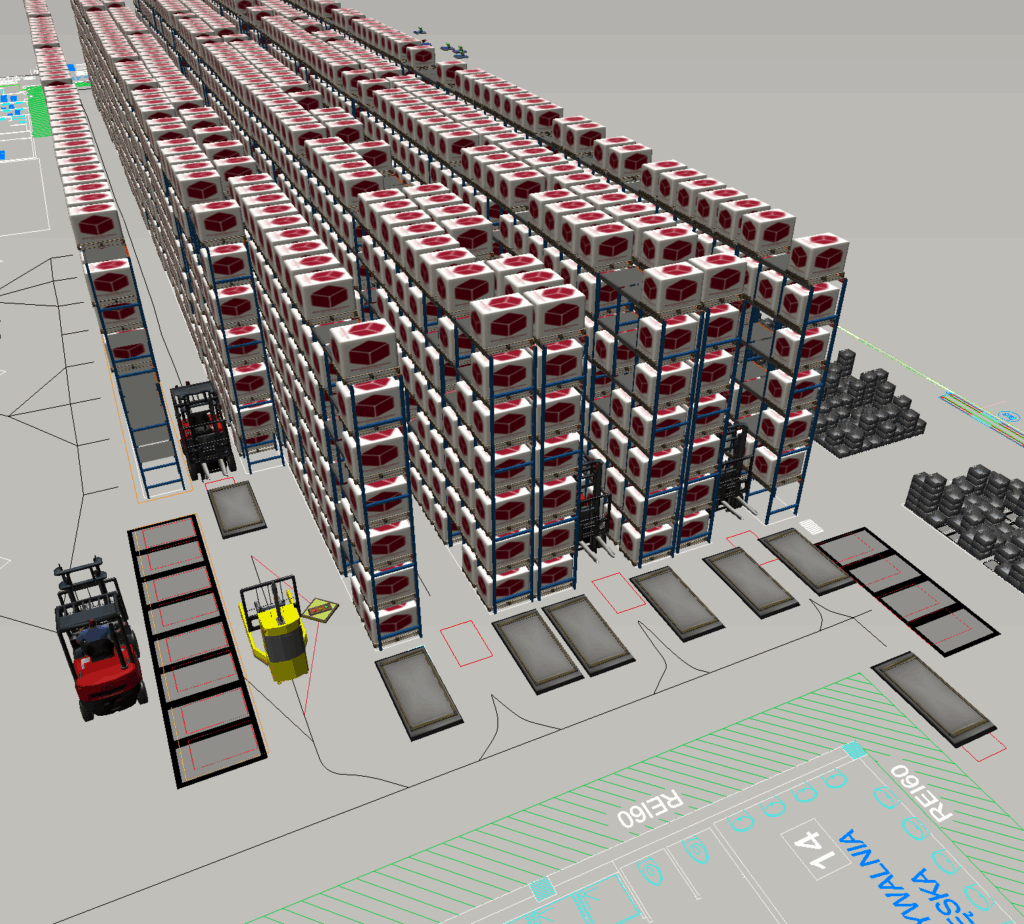
In modern warehouses, congestion in loading and unloading areas is a serious challenge. Overloaded docks, inefficient scheduling, and space constraints often result in delays, increased costs, and operational inefficiencies.
The key objective of this project was to determine:
- The optimal number of required material handling resources.
- The appropriate types of equipment to maximize efficiency.
- How to ensure smooth material flow and avoid congestion.
The most important changes for an efficient warehouse
Initial configuration
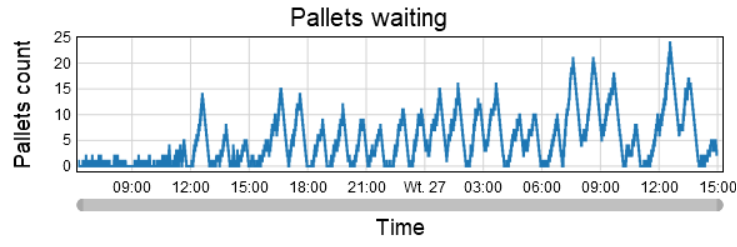
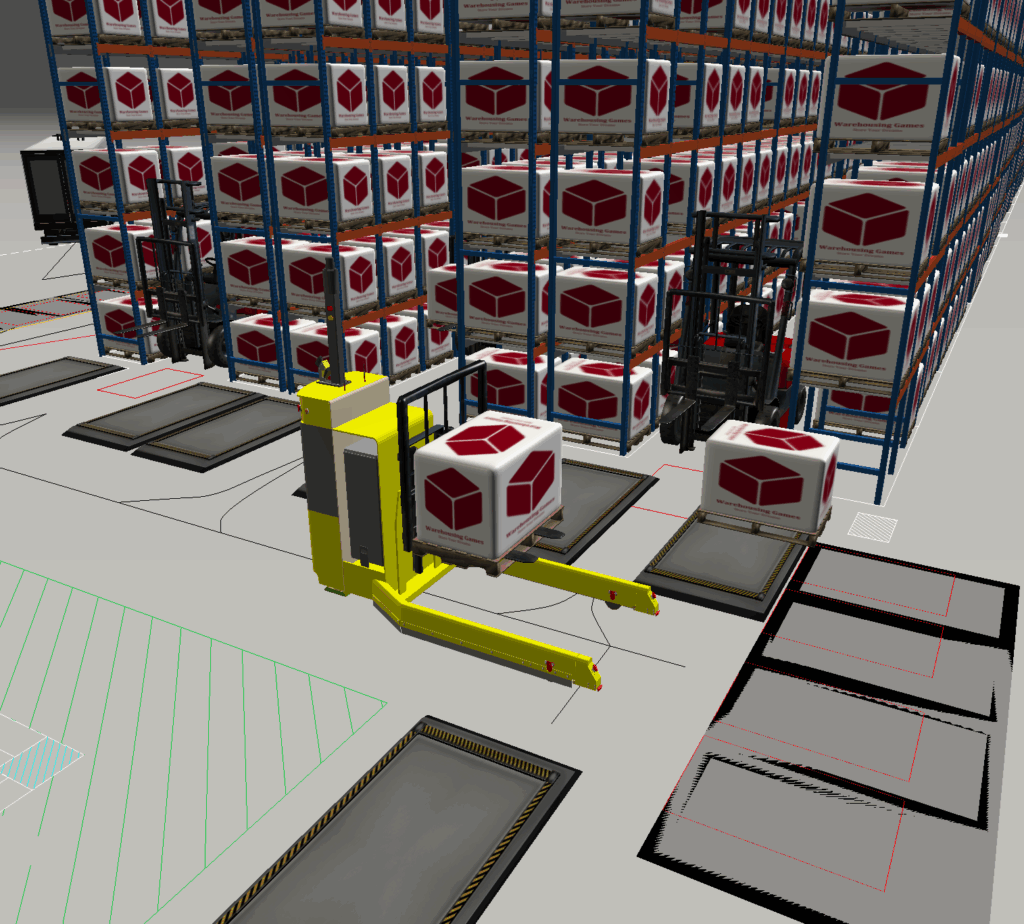
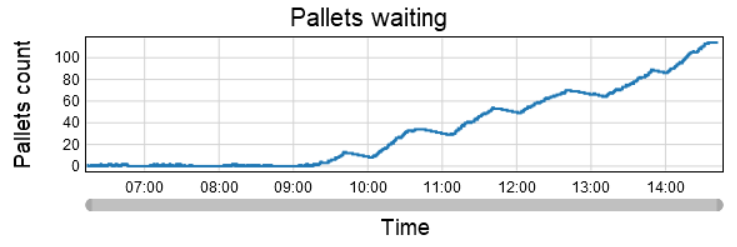
The warehouse was planned with 4 VNA (Very Narrow Aisle) system trucks and 1 pallet stacker truck. However, simulation results showed that dock congestion was the main issue due to overloading of a single pallet stacker truck.
Optimization
To address dock congestion, the simulation recommended adding a second pallet stacker truck while simultaneously reducing the number of VNA trucks to achieve more efficient resource allocation.
Improved results
The final configuration ensured:
- Reduced waiting time at the docks.
- Better resource utilization without unnecessary costs.
- Higher throughput and long-term efficiency.
Why is simulation essential in warehouse planning?
- Identification of potential bottlenecks before implementation.
- Optimization of resource allocation to avoid unnecessary costs.
- Ensuring flexibility by testing multiple configurations in a risk-free environment.